
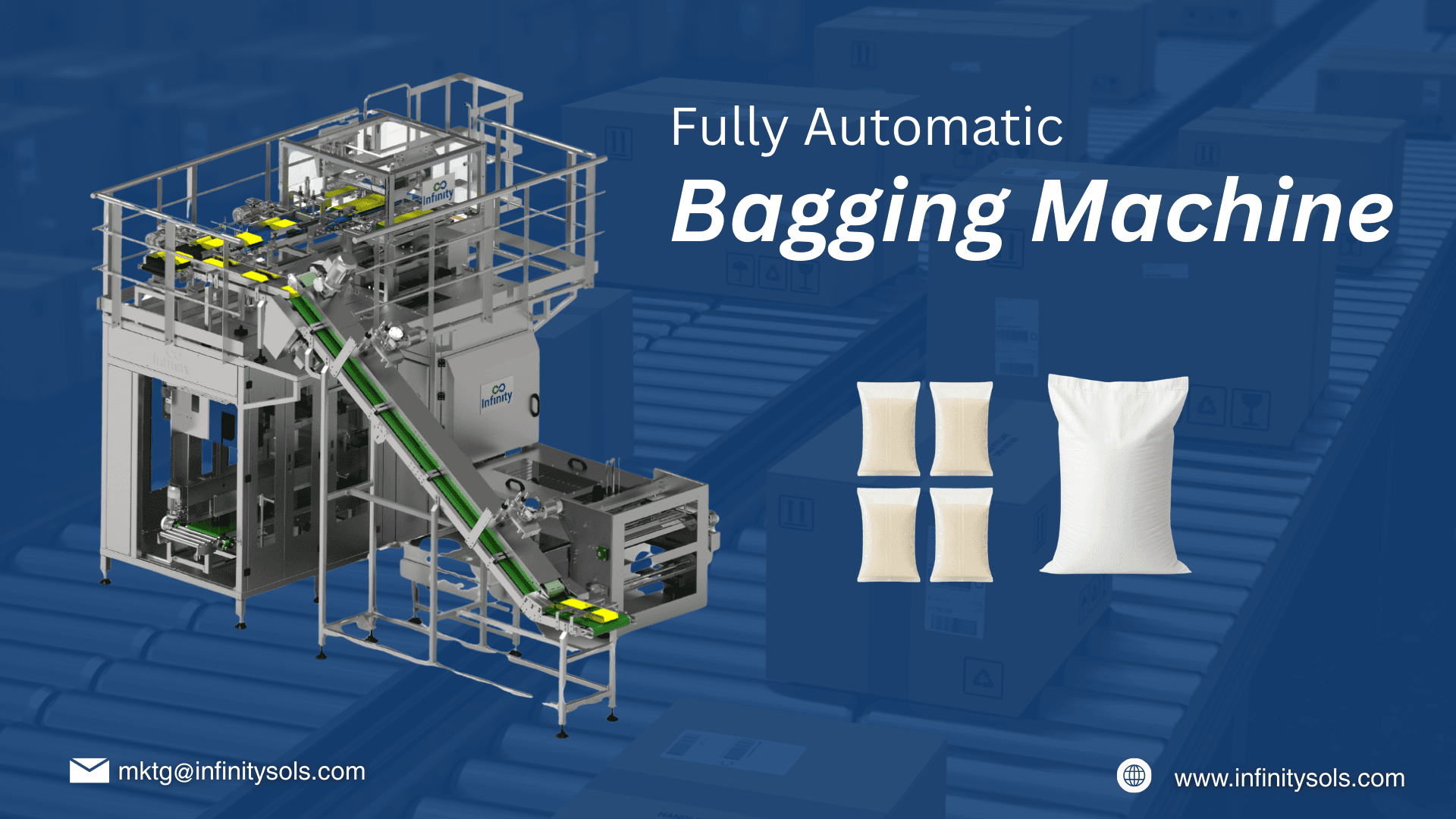
Bagging Machine: The Smart Packaging Solution Transforming Modern Manufacturing
The race to meet rising consumer demand has pushed manufacturers to rethink every step of their production process — and packaging is no exception. When products move off the line in tons rather than kilograms, hand-filling bags simply cannot keep up. That is where a bagging machine steps in, turning what was once a labour-intensive bottleneck into a high-speed, precision-driven operation.
Whether you are packaging rice, cement, fertilizer, or specialty chemicals, the right automated bagging solution directly determines your output capacity, product consistency, and bottom-line profitability. This guide breaks down everything you need to know — from how these machines work to which type suits your application.
What Is a Bagging Machine?
A bagging machine is an industrial packaging system engineered to measure, fill, and seal products into bags at high speed with minimal human intervention. These machines handle everything from lightweight retail pouches to heavy-duty bulk sacks, making them indispensable across food processing, agriculture, chemicals, and construction.
At their core, bagging machines combine product metering, precision weighing, bag handling, and sealing into one continuous automated workflow. Advanced models also integrate with upstream feeders and downstream conveyors, creating a fully connected production line that requires minimal operator input.
How Does a Bagging Machine Work? Step-by-Step Process
Understanding the operational sequence helps you identify where automation adds the most value on your production floor:
1. Product Feeding
Raw material is drawn from a hopper, silo, or upstream conveyor into the bagging system's inlet. Screw feeders, belt feeders, or vibratory channels regulate product flow according to machine speed.
2. Weighing & Measurement
An integrated weighing system — typically a net weigh or gross weigh scale — calculates the exact quantity required per bag. Multi-head combination weighers are used for high-speed applications where accuracy within grams matters.
3. Bag Placement & Opening
Pre-made bags are either automatically dispensed from a magazine or manually placed by an operator. Pneumatic clamps and vacuum suction cups hold each bag open and perfectly aligned under the fill spout.
4. Filling
The measured product is discharged into the bag in a controlled flow. Anti-dust baffles and slow-feed functions prevent spillage and ensure the correct final weight.
5. Sealing
Depending on the bag type and product, sealing is achieved through heat sealing, thread stitching, or adhesive bonding. A robust seal is critical for product integrity during transit.
6. Transfer to Secondary Packaging
Sealed bags move onto outfeed conveyors for downstream processing — checkweighing, labelling, bundling, or palletising.
Types of Bagging Machines: Which One Is Right for You?
No two products are identical, and neither are their packaging requirements. Here is a breakdown of the most widely used bagging machine types:
Open-Mouth Bagging Machines
Best suited for granular or chunky products that cannot be fed through a valve. Pre-made bags are opened, filled, and sealed in sequence. Common in agriculture (seeds, grains), pet food, and construction (sand, aggregates).
Valve Bagging Machines
Purpose-built for fine powders such as cement, flour, and specialty chemicals. Product is injected through a valve opening in the bag, which self-seals under filling pressure — dramatically reducing dust emissions and fill time.
Form-Fill-Seal (FFS) Machines
These machines form bags from a continuous roll of packaging film, fill them, and seal — all in one uninterrupted motion. Ideal for retail food products, snacks, and FMCG items where presentation and speed are both priorities
Bulk / FIBC Bagging Machines
Designed for filling jumbo bags (also called big bags or super sacks) used in bulk material logistics. Common in mining, chemicals, and large-scale food ingredient handling where each bag can hold 500 kg to 2,000 kg.
Rotary Bagging Machines
High-throughput systems where multiple bag stations rotate around a central axis. Each station handles a different stage simultaneously — opening, filling, sealing — making them ideal for plants targeting 1,000+ bags per hour.
Key Benefits of Automating with a Bagging Machine
• Faster Throughput Without Sacrificing Accuracy: Automated systems maintain consistent fill cycles that human operators simply cannot match over extended shifts. Output rates of 600 to 1,800 bags per hour are achievable depending on bag size and product type, all while maintaining tight weight tolerances.
• Reduced Product Giveaway: Precision weighing technology ensures every bag contains exactly the specified quantity — no more, no less. Even a 1% reduction in giveaway translates to significant material savings across millions of bags per year.
• Lower Operational Costs: While the initial capital investment is real, automated bagging reduces reliance on manual labour for repetitive filling tasks, cutting long-term costs and reallocating personnel to higher-value activities.
• Consistent Packaging Quality: Uniform bag dimensions, clean seals, and accurate fills ensure your product looks professional on shelf or in warehouse storage — reducing customer complaints and returns.
• Enhanced Worker Safety: Eliminating repetitive heavy lifting and reducing exposure to dust-generating products creates a safer work environment and helps businesses meet occupational health standards.
• Scalability: Modern bagging machines can be configured for different bag sizes and product types with minimal changeover time, making them suitable for growing businesses and multi-product facilities.
Integrating Bagging Machines into a Complete Packaging Line
A bagging machine rarely operates in isolation. In modern manufacturing plants, it functions as one node in a larger automated packaging ecosystem. The upstream side connects to hoppers, mixers, and product conveyors. The downstream side feeds into secondary and end-of-line packaging equipment.
Typical downstream integrations include:
• Checkweighers to verify every filled bag meets regulatory weight requirements
• Metal detectors and X-ray inspection systems for quality assurance
• Pouch bundling machines for grouping multiple bags into retail-ready multipacks
• Cartoning machines and case packers for secondary carton or box packaging
• Stretch wrapping and palletising systems to prepare finished goods for despatch
Infinity Automated Solutions Pvt. Ltd. specialises in secondary packaging and end-of-line packaging machinery that connects seamlessly with bagging systems, helping manufacturers build fully automated, high-efficiency production lines tailored to their specific throughput and product requirements.
Industries That Rely on Bagging Machine Technology
Bagging automation is not limited to a single sector. These machines deliver value across a wide range of industries:
Food & Beverage
Rice, wheat flour, sugar, spices, coffee, pulses, snack foods — anywhere accurate portioning and food-safe sealing are required.
Agriculture
Fertilizers, seeds, animal feed, and crop protection granules demand high-speed filling with minimal product degradation.
Chemicals & Pharmaceuticals
Powder chemicals, polymer pellets, and specialty compounds require enclosed, dust-controlled bagging systems with precise fill accuracy.
Construction Materials
Cement, gypsum, tile adhesives, and sand mixes rely on valve or open-mouth baggers that handle dense, abrasive materials reliably.
Pet Food & Animal Nutrition
Dry kibble, treats, and supplement powders benefit from gentle handling systems that preserve product shape and coating integrity.
What to Consider Before Investing in a Bagging Machine
Selecting the right machine for your operation requires evaluating several critical factors:
• Product characteristics — Is your product a free-flowing powder, sticky granule, or irregular solid? Flowability determines which feed and fill mechanism is appropriate.
• Required output speed — Calculate your target bags-per-hour based on production schedules and available floor time.
• Bag type and size range — Open-mouth, valve, or film? What range of bag weights do you need to handle?
• Weighing accuracy requirements — Industries like food and pharma demand tighter tolerances than construction materials.
• Hygiene and safety standards — Food-grade stainless steel construction, IP-rated control panels, and CIP (clean-in-place) compatibility may be mandatory.
• Integration requirements — Confirm compatibility with your existing upstream feeders, conveyors, and downstream packaging lines.
• After-sales support and spare parts availability — Long-term machine uptime depends as much on service infrastructure as on machine quality.
Conclusion: Future-Proof Your Packaging Line with Bagging Automation
As manufacturing scales up and competition tightens, packaging efficiency has moved from a nice-to-have to a genuine competitive advantage. A high-performance bagging machine brings together speed, accuracy, and reliability in a way that manual operations never can — and when integrated with a full end-of-line automation system, the gains multiply across every stage of your production floor.
Whether you are evaluating your first automated bagger or upgrading an existing line, the key is matching the right machine type to your specific product, output goals, and integration requirements. Done correctly, the investment pays back through reduced labour costs, lower giveaway, fewer defects, and a packaging line that grows with your business.
Infinity Automated Solutions Pvt. Ltd. offers expert guidance on secondary and end-of-line packaging machinery that works in harmony with your bagging system. Contact our team today to discuss how we can help you build a smarter, faster, and more efficient packaging operation.
Frequently Asked Questions (FAQs)
Q: What is the difference between a bagging machine and a filling machine?
A: A filling machine focuses solely on dispensing a measured quantity of product into a container. A bagging machine is a more comprehensive system that also handles bag placement, sealing, and often conveyance — making it a complete packaging solution rather than a single-function device.
Q: Can one bagging machine handle multiple bag sizes?
A: Yes. Many modern bagging machines feature quick-change tooling and adjustable bag clamps, allowing operators to switch between bag sizes with minimal downtime during product changeovers.
Q: Is a bagging machine suitable for dusty or hazardous materials?
A: Valve-type bagging machines are specifically engineered for fine, dusty, or hazardous powders, incorporating enclosed fill heads and dust extraction ports to contain emissions and protect operators.
Q: How do I maintain a bagging machine?
A: Routine maintenance includes cleaning product contact surfaces, inspecting seal jaws and heating elements, lubricating mechanical components, calibrating weighing systems, and checking bag clamp wear. Preventive maintenance schedules provided by the manufacturer are essential for long-term reliability.