
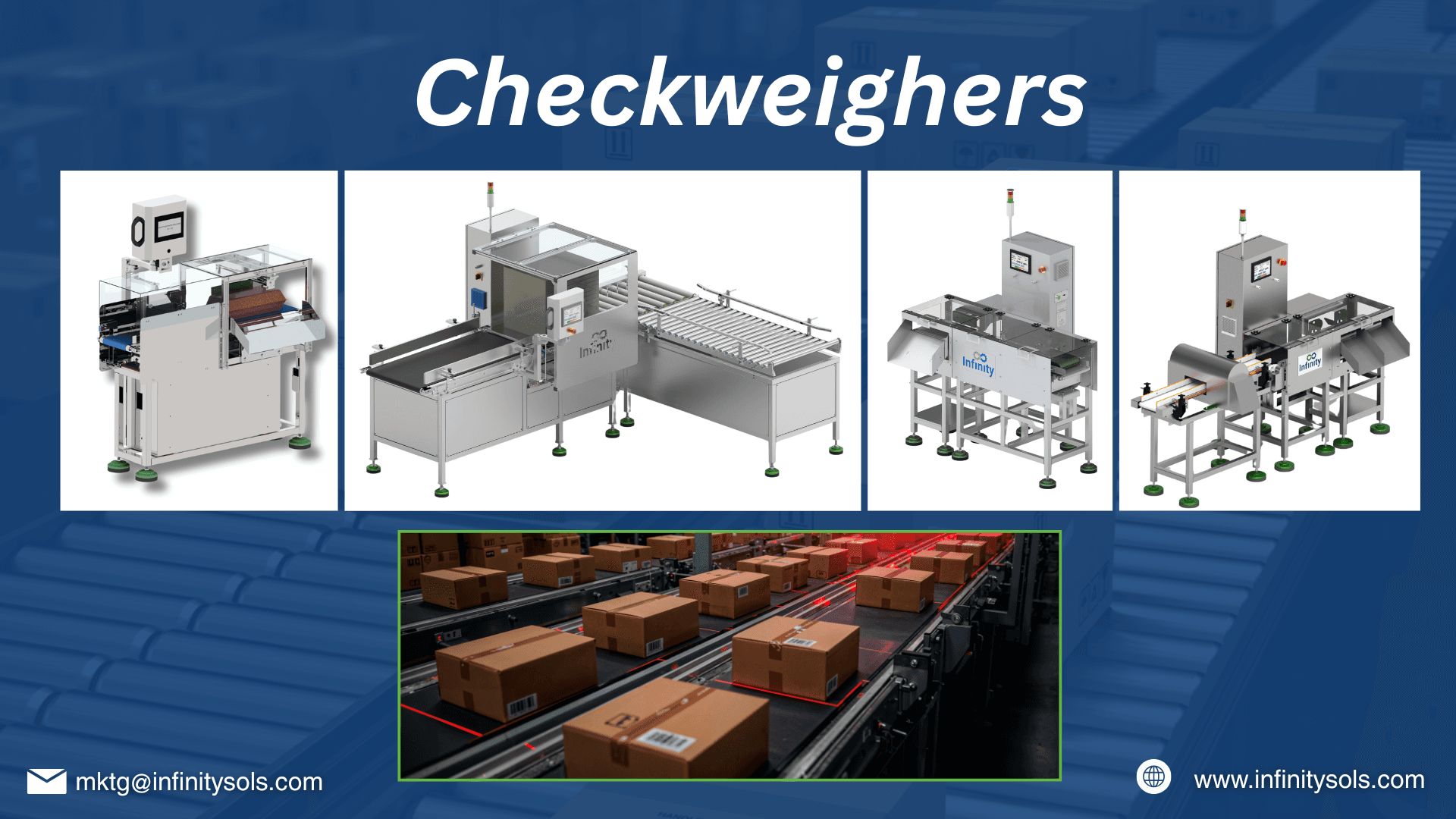
Introduction to Checkweigher Systems in Modern Manufacturing
In today’s competitive manufacturing environment, maintaining accurate product weight is not just a quality requirement but also a legal and financial necessity. A checkweigher machine plays a critical role in ensuring that every packed product meets the declared weight before it reaches the customer.
From food and pharmaceuticals to FMCG and industrial goods, manufacturers depend on checkweighers to maintain consistency, reduce product loss, and comply with regulatory standards. It is one of the most important inspection systems in an automated end-of-line packaging setup.
What is a Checkweigher Machine?
A checkweigher is an automatic weighing system installed on a production line to measure the weight of packed products while they are moving. It verifies whether each unit falls within a predefined weight range.
If the product is underweight or overweight, the system automatically removes it from the line using a rejection mechanism. This ensures that only correctly filled and compliant products proceed to the next stage of packaging, such as cartoning, case packing, or palletizing.
Unlike manual weighing methods, a checkweigher operates continuously and at high speed without interrupting production flow.
How a Checkweigher Works in a Packaging Line
The process begins when a packaged product moves along the conveyor belt. As it passes over the weighing platform, a precision load cell measures its weight in real time.
The machine’s control system instantly compares the measured weight with the preset target value. If the weight is within the acceptable tolerance, the product continues forward. If not, the system activates a rejection device such as a pusher, air jet, or drop mechanism to remove the faulty unit.
This entire process happens in seconds, ensuring high-speed inspection without slowing down the packaging line.
Importance of Checkweighers in Quality Control
A checkweigher ensures consistent product quality and protects the brand’s reputation. Underfilled products can lead to customer dissatisfaction and regulatory penalties, while overfilled products increase material costs and reduce profit margins.
By maintaining precise weight control, manufacturers can reduce product giveaway and improve operational efficiency. In regulated industries such as pharmaceuticals and food processing, weight verification is also a compliance requirement.
Integration with Secondary and End-of-Line Packaging
In a structured packaging flow, the checkweigher is typically placed after the primary filling and sealing stage. Once weight verification is completed, products move to secondary packaging systems such as cartoning machines, case packers, or shrink wrapping machines.
This integration ensures that only accurate and compliant products are grouped, packed, and prepared for distribution. It prevents defective products from entering bulk packaging, reducing waste and rework costs.
Key Features of a Modern Checkweigher Machine
Modern checkweighers are designed for precision, speed, and reliability. They include high-sensitivity load cells, digital control panels, programmable settings for multiple product types, and data recording systems for audit purposes.
Advanced models also offer real-time monitoring, production data analysis, and integration with ERP systems. Stainless steel construction and hygienic design make them suitable for food and pharmaceutical applications.
Benefits for Manufacturers
Installing a checkweigher improves packaging accuracy and enhances overall production control. It reduces manual inspection, minimizes human error, and increases productivity.
Manufacturers also gain access to valuable production data, which helps in performance analysis and process improvement. By maintaining consistent weight standards, businesses can avoid regulatory fines and build customer trust.
Choosing the Right Checkweigher for Your Industry
Selecting the right checkweigher depends on factors such as product weight range, line speed, accuracy requirements, and environmental conditions. High-speed FMCG lines require dynamic checkweighers capable of handling hundreds of packs per minute. Pharmaceutical lines may demand extremely high accuracy and data traceability.
Understanding production goals and integration needs ensures that the selected machine delivers long-term performance and return on investment.
Conclusion
A checkweigher machine is a critical quality assurance tool in modern packaging operations. It ensures that every product leaving the production line meets weight standards, protects profitability, and supports regulatory compliance.
For manufacturers focused on precision, efficiency, and brand reputation, investing in a reliable checkweigher system is a strategic step toward operational excellence.