
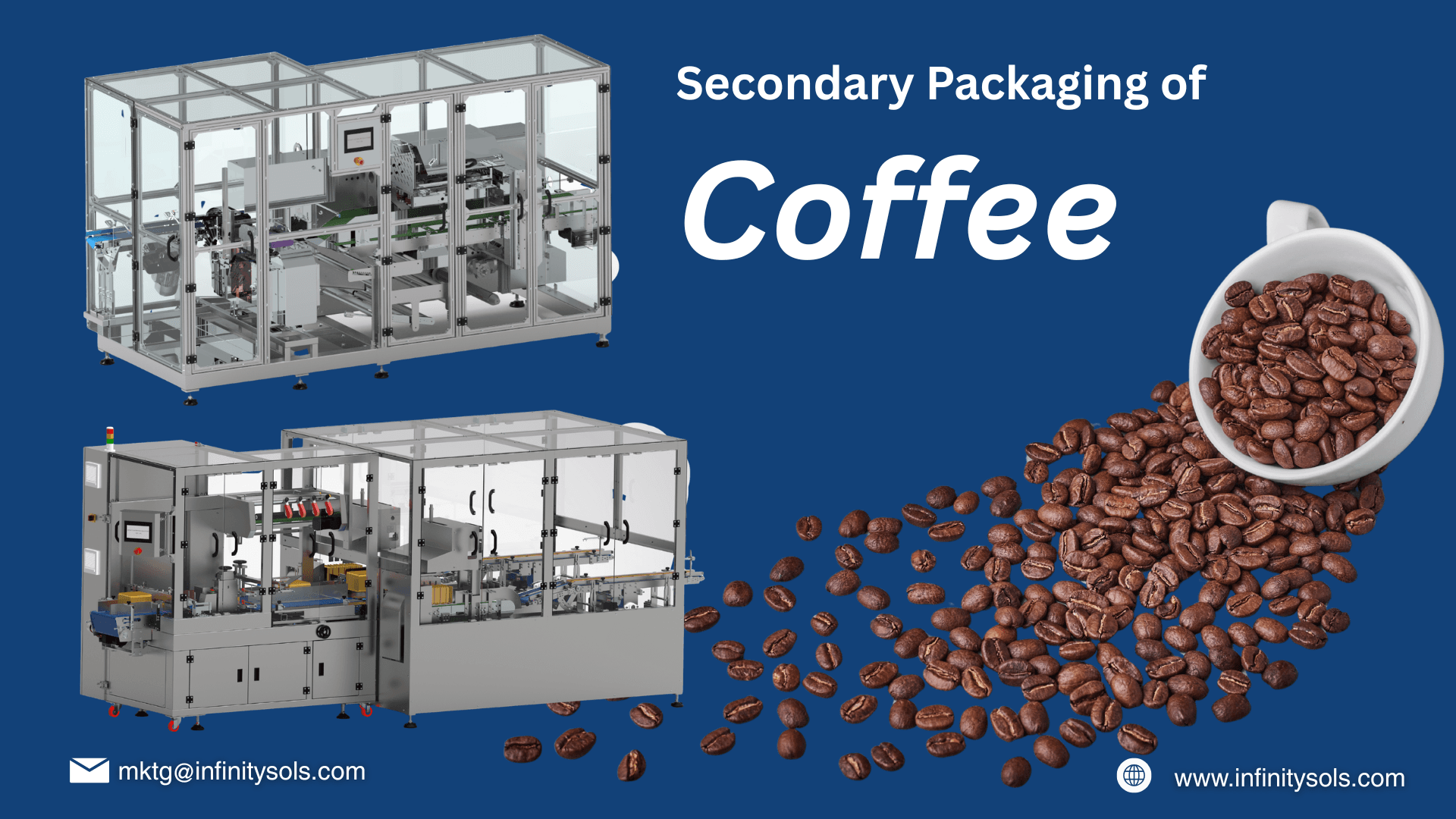
Understanding Secondary Packaging of Coffee
Secondary packaging of coffee refers to the process of grouping, protecting, and preparing primary coffee packs for storage, transportation, and retail distribution. After coffee is packed into pouches, sachets, or pillow bags, secondary packaging ensures these individual packs are organized into bundles, cartons, or shrink-wrapped units for safe handling.
In competitive coffee markets, especially in growing regions like India, secondary packaging plays a crucial role in maintaining product quality and operational efficiency.
Why Secondary Packaging is Important in the Coffee Industry
Coffee is a sensitive product that must be protected from moisture, air, and physical damage. While primary packaging protects the product inside, secondary packaging protects the packs during logistics and storage.
For manufacturers supplying supermarkets, distributors, and export markets, organized secondary packaging reduces transit damage, improves warehouse management, and speeds up dispatch. It also enhances the professional appearance of multipacks and bulk shipments.
Types of Secondary Packaging Used for Coffee
The secondary packaging of coffee depends on the product format. For small sachets or single-serve pouches, a pouch bundling machine or strip bundling machine is commonly used to group units into retail-ready packs. These bundles are easy to handle and convenient for retailers.
For larger retail pouches, a shrink wrapping machine is often used to create secure multipacks. Shrink wrapping provides tight sealing around grouped coffee packs, ensuring stability during transportation.
Bulk packaging operations may also use automatic bagging machine systems to pack multiple units into larger sacks for wholesale distribution. In export or warehouse applications, an automatic baling machine may be used to compress and secure packaging waste or outer materials efficiently.
Integration with Case Packing and Cartoning
In high-volume coffee production plants, secondary packaging of coffee is fully automated. After bundling or shrink wrapping, products move through conveying systems to case packing and cartoning units. These machines place coffee packs into corrugated boxes, seal them, and prepare them for palletizing.
Checkweighers are also integrated to verify the weight of each carton or bundle, ensuring compliance with quality standards and avoiding underfilled or overweight shipments.
Companies such as Infinity Automated Solutions Pvt Ltd specialize in secondary and end-of-line automation systems that support coffee manufacturers in building efficient packaging lines.
Benefits for Coffee Manufacturers
Investing in advanced secondary packaging of coffee improves production speed and reduces manual handling. Automation ensures consistent bundle formation, accurate carton packing, and reduced labor costs.
It also enhances product safety and brand image. Properly packed coffee reaches retailers and customers in perfect condition, strengthening trust and repeat business.
Conclusion
Secondary packaging of coffee is more than just grouping products. It is a strategic part of the packaging line that protects the brand, improves logistics efficiency, and supports business growth.
By integrating pouch bundling machine, strip bundling machine, shrink wrapping machine, case packing, cartoning, conveying, and checkweighers into the production process, coffee manufacturers can achieve reliable, high-speed, and cost-effective packaging operations that meet modern market demands.