
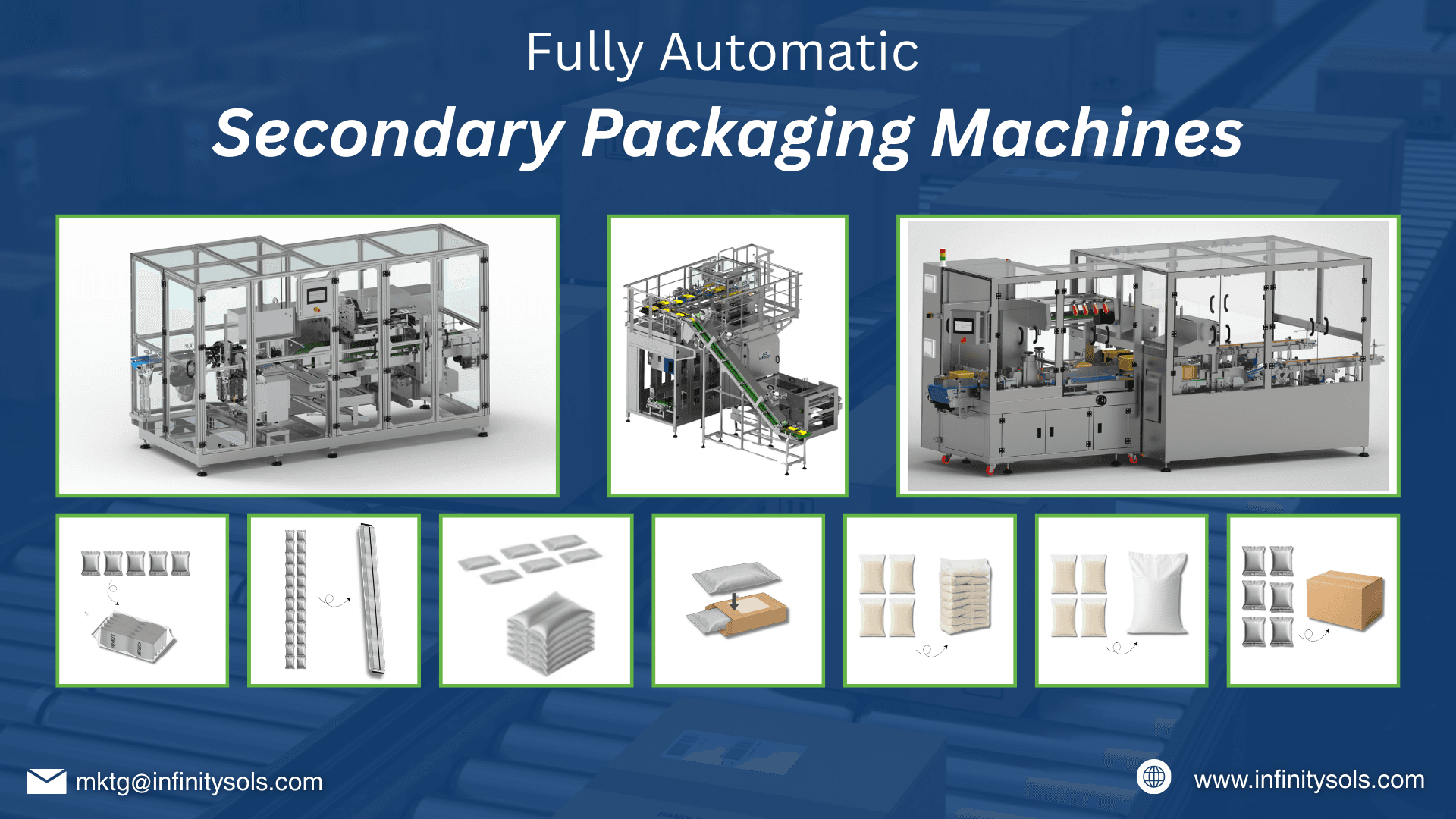
Understanding Secondary Packaging in Simple Terms
Secondary packaging is the outer layer of packaging used to group, protect, and transport primary packaged products. While primary packaging directly holds the product, such as a pouch, bottle, or sachet, secondary packaging organizes multiple primary units into bundles, cartons, or cases for easier handling, storage, and distribution.
In industrial production lines, secondary packaging plays a critical role in improving efficiency, ensuring product safety, and enhancing brand presentation during logistics and retail movement.
For example, individual shampoo sachets are primary packaging. When these sachets are grouped into strips, bundles, or cartons, that process becomes secondary packaging.
Why Secondary Packaging is Important
Secondary packaging ensures:
- Better protection during transportation
- Easy stacking and storage in warehouses
- Improved retail display
- Faster loading and unloading
- Reduced product damage
- Streamlined supply chain operations
For manufacturers, secondary packaging is not just about wrapping products. It is about building a structured, automated end-of-line system that improves productivity and reduces manual handling.
Types of Secondary Packaging Systems
Modern packaging lines use different technologies depending on product type, size, and market requirement. Below are key secondary packaging solutions widely used in industries such as FMCG, food, pharmaceuticals, and personal care.
IBP – Pouch Bundling Machine
IBP stands for Infinity Bundling of Pouch (commonly referred to as a pouch bundling machine). This system is used to bundle individual pouches into neat and compact packs.
For example, small food pouches, spice packs, or dairy sachets can be automatically grouped into a fixed count, such as 5, 10, or 20 pieces per bundle. The IBP system aligns the pouches, stacks them properly, and wraps them securely.
This ensures:
- Uniform bundle formation
- Improved counting accuracy
- Reduced manual labor
- Faster secondary packaging speed
IBP machines are ideal for high-volume pouch packaging industries where speed and consistency are critical.
IBS – Strip Bundling Machine
IBS stands for Infinity Bundling of Strip. It is mainly used for small sachets or strip-form products such as 10g or 50g packs.
In this system, multiple sachets are joined together in strip form and bundled as per requirement. The strip bundling machine ensures proper alignment and secure packing without damaging lightweight products.
IBS systems are especially useful in tea, shampoo, pharmaceutical sachets, and small FMCG products where strip format is common in retail markets.
Shrink Wrap Packaging
Shrink wrap is another widely used secondary packaging method. In this system, products are grouped together and wrapped in a shrink film. Heat is applied to shrink the film tightly around the products, forming a strong and protective pack.
Shrink wrapping is commonly used for:
- Bottle packs
- Can packs
- Carton grouping
- Multipack retail packaging
It provides:
- Excellent product visibility
- Strong load stability
- Tamper evidence
- Cost-effective grouping solution
Shrink wrap packaging is popular in beverage, dairy, and FMCG industries due to its durability and clean presentation.
Cartoning in Secondary Packaging
Cartoning machines are used to place grouped products into corrugated or mono cartons. This step adds another protective layer and prepares the product for transportation or retail display.
Automatic cartoning ensures uniform carton forming, product insertion, and sealing, making it suitable for structured supply chains and export packaging.
Case Packing and Cover Packaging
Case packing machines are used to place bundled or carton-packed products into corrugated cases for bulk transportation.
Cover packaging refers to protective top or outer layer packaging used to safeguard bundles during transit. It prevents dust, moisture, and physical damage, especially during long-distance shipping.
This step ensures the final packed goods are secure and ready for palletizing and distribution.
How Secondary Packaging Fits into the Production Line
In a complete packaging setup, the process flows like this:
- Primary packaging fills and seals the product in pouches or containers.
- Secondary packaging systems like IBP, IBS, shrink wrap, or cartoning group the products.
- Case packing and palletizing prepare the goods for warehouse and dispatch.
This structured automation reduces errors, increases speed, and improves overall operational efficiency.
Final Thoughts
Secondary packaging is a critical stage in modern manufacturing. It connects production with logistics and ensures that products reach distributors and retailers safely and professionally. Whether using IBP for pouch bundling, IBS for strip bundling, shrink wrap for multipack grouping, or cartoning and case packing systems, secondary packaging helps businesses achieve consistency, efficiency, and scalability.
For companies aiming to automate their end-of-line packaging, investing in the right secondary packaging solution is essential for long-term growth and operational excellence.