
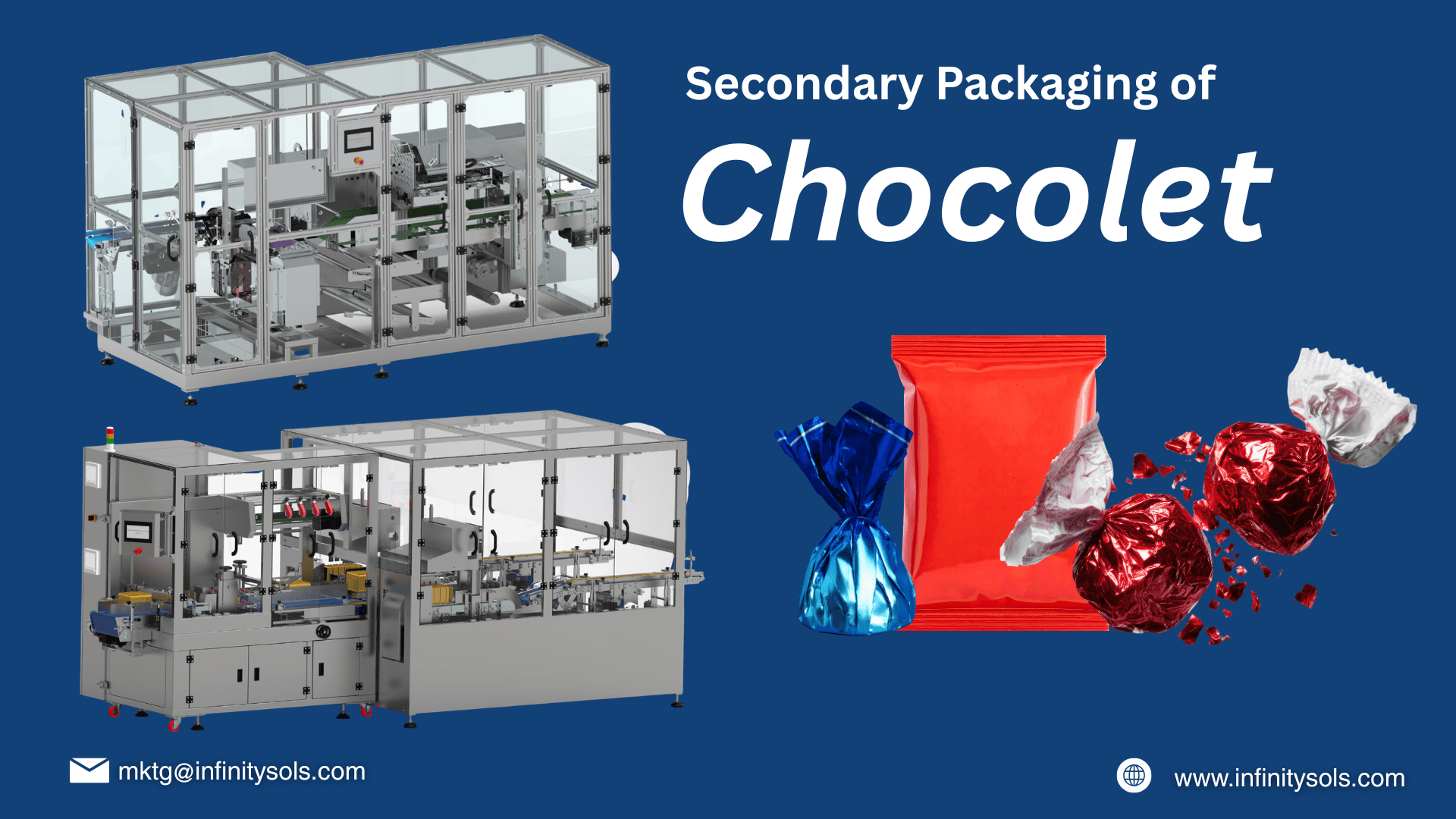
Secondary Packaging of Chocolate
Secondary packaging of chocolate is an important stage in the food manufacturing process. Chocolate products are delicate, temperature-sensitive, and often sold in high volumes. After primary packaging, such as wrappers or flow wraps, secondary packaging ensures the products are grouped, protected, and ready for transportation and retail display.
In the competitive confectionery market, good secondary packaging not only protects the product but also improves shelf appeal and brand value.
Understanding Primary and Secondary Packaging
Primary packaging is the wrapper that directly covers the chocolate bar, candy, or praline. This can be foil, paper wrap, or flow wrap film. Secondary packaging is the outer layer that holds multiple primary packs together. It includes printed cartons, display boxes, trays, and corrugated shipping cases.
For example, individual chocolate bars are packed into cartons, and then multiple cartons are arranged into larger shipping boxes for distribution.
Importance of Secondary Packaging in Chocolate Industry
Secondary packaging of chocolate plays a major role in protecting the product from damage. Chocolate is sensitive to heat, humidity, and physical impact. Strong cartons and properly packed cases help maintain shape, texture, and quality during storage and transportation.
It also helps in better product presentation. Retail-ready cartons and display boxes allow easy placement on supermarket shelves. Attractive secondary packaging supports branding and marketing efforts.
In large consumer markets like India, where chocolate demand is growing rapidly, manufacturers require efficient and high-speed packaging systems to handle bulk production.
Machines Used in Secondary Packaging of Chocolate
Modern chocolate manufacturing plants use automated machines for secondary packaging. Cartoning machines automatically place wrapped chocolate bars into cartons. These machines ensure accurate counting and neat arrangement.
Case packing machines then group multiple cartons into corrugated shipping boxes. This reduces manual handling and improves speed and efficiency. Checkweighers are used to verify that each carton contains the correct number of chocolate bars before dispatch. Conveying systems connect all machines for smooth and continuous operation.
Automation reduces labor costs, improves hygiene standards, and ensures consistent packaging quality.
Benefits of Automated Secondary Packaging
Automated secondary packaging of chocolate increases production speed and reduces packaging errors. It protects products from transit damage and improves warehouse management. Structured case packing also makes palletizing and export handling easier.
Companies like Infinity Automated Solutions Pvt Ltd provide end-of-line packaging solutions such as case packing machines, checkweighers, and conveying systems that support efficient chocolate packaging operations.
Conclusion
Secondary packaging of chocolate is more than just placing products in a box. It ensures product protection, improves brand presentation, and supports smooth logistics. With increasing competition in the confectionery industry, investing in advanced secondary packaging systems helps manufacturers deliver safe, attractive, and high-quality products to customers.