
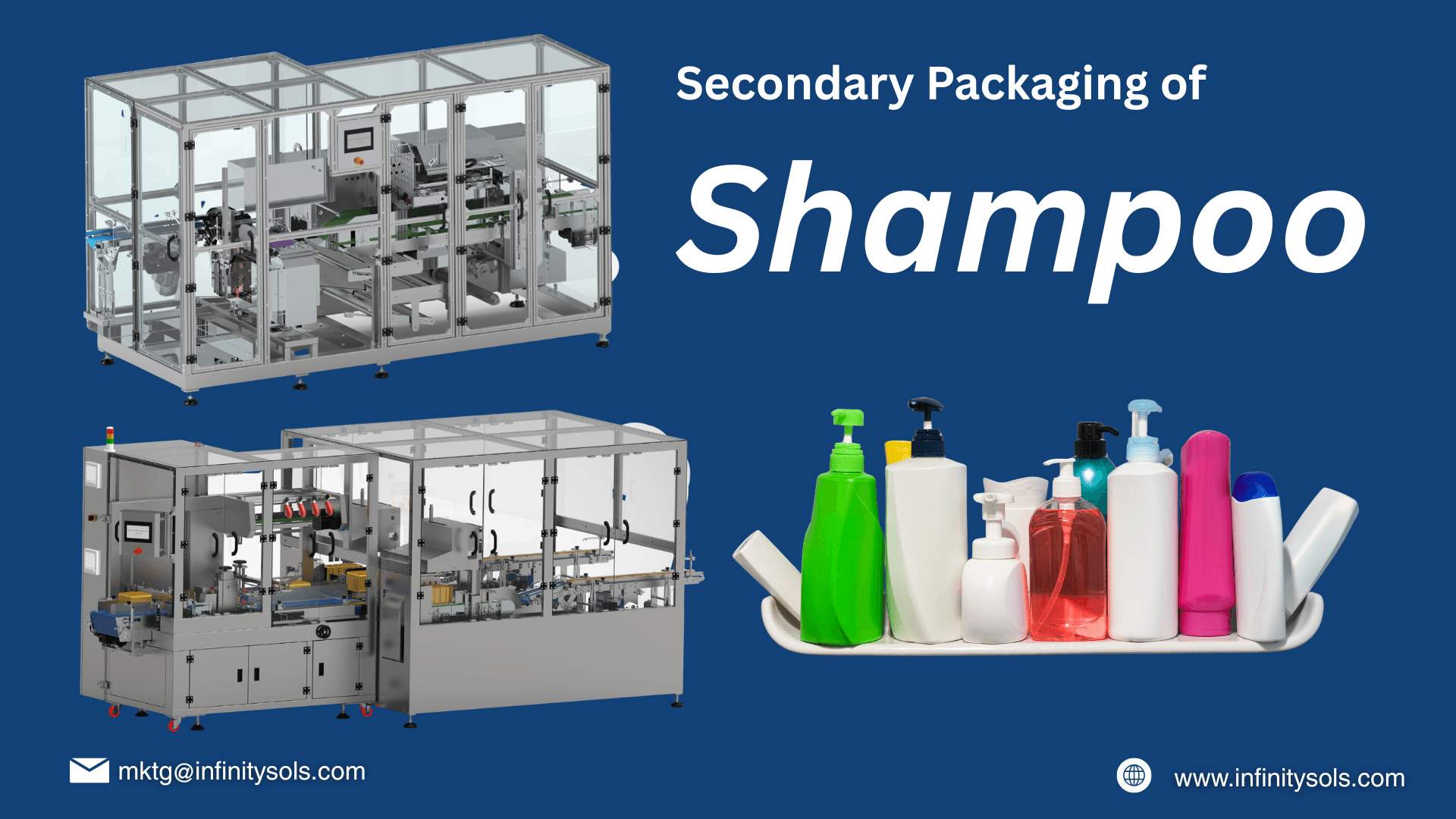
Understanding Secondary Packaging of Shampoo
Secondary packaging of shampoo involves grouping, protecting, and preparing filled shampoo units for storage, transportation, and retail distribution. After primary packaging, where shampoo is filled into sachets, pouches, or bottles, secondary packaging ensures these units are organized into bundles, strips, or cartons for efficient handling.
In fast-moving consumer goods markets like India, shampoo is produced in very high volumes. To manage this scale efficiently, manufacturers rely on automated secondary packaging systems.
Handling High-Volume Sachet and Bottle Production
Shampoo is commonly sold in small sachets, refill pouches, and retail bottles. For sachet production lines, bundling machine groups individual sachets into structured bundles. A strip bundling machine connects sachets into retail-friendly strips that are easy to hang and display in small stores.
For bottle-based packaging, multipacks can be stabilized using a shrink wrapping machine. Shrink wrapping tightly secures grouped bottles or cartons, preventing movement during transport and improving shelf presentation.
Automation for Bulk Distribution and Logistics
In large FMCG plants, automation continues beyond bundling. An automatic bagging machine may collect multiple bundled units into larger bags for wholesale supply. An automatic baling machine helps compress packaging waste materials, improving operational efficiency and plant cleanliness.
After bundling or shrink wrapping, products move through conveying systems toward case packing and cartoning units. These systems place grouped shampoo units into corrugated cartons ready for dispatch. Checkweighers are integrated to verify carton weight, ensuring shipment accuracy and reducing errors.
Companies like Infinity Automated Solutions Pvt Ltd provide advanced end-of-line automation solutions that support shampoo manufacturers in building reliable and high-speed secondary packaging lines.
Why Secondary Packaging Drives Business Performance
Efficient secondary packaging of shampoo improves productivity and reduces manual handling. It ensures consistent bundle formation, faster dispatch, and better warehouse organization. Automation also enhances product safety during transportation, especially in humid or high-temperature environments.
For B2B shampoo manufacturers supplying distributors and retail chains, strong secondary packaging supports scalability and faster order fulfillment.
Conclusion
Secondary packaging of shampoo is essential for managing high production volumes and maintaining operational efficiency. By integrating pouch bundling machine, strip bundling machine, shrink wrapping machine, automatic bagging machine, automatic baling machine, case packing, cartoning, conveying, and checkweighers, manufacturers can create a streamlined and dependable packaging process.
In the competitive FMCG sector, efficient secondary packaging ensures shampoo products reach the market safely, neatly packed, and ready for retail display.